
Qualitative Analysis / Text MiningQualitative analysis / Text mining
Stat Agent accepts a wide range of consultations regardingQualitative Analysis / Text MiningWe accept a wide range of requests involving linguistic data that cannot be fully understood through numerical information alone, including interview transcripts, free-text responses, observation records, written records, and meeting notes. We provide integrated support from interpretation of meaning and categorization through structural understanding and theme extraction.
Qualitative analysis requires more than simply reading text. It is important to determineselect analytical methods that fit the research objective,、what unit should be coded and how categories should be constructed,、and how the results should be presented as figures, tables, or narrative descriptions.Accordingly, we emphasize analytical design suited to the objective using methods such as M-GTA, GTA, thematic analysis, content analysis, narrative analysis, the KJ method, and text mining.
In recent years, more researchers and practitioners have used generative AI and automated summarization tools to create initial drafts of qualitative analysis. However, AI-generated output may containunnatural segmentation of codes, misreading of context, vague category names, summaries that diverge from the research objective, or confusion among methodologies.In academic and applied research especially, transparency of the analytical process and valid interpretation are required. AI output therefore should not be used without expert review.
For this reason, Stat Agent emphasizesWe emphasize human review of the analytical objective, data characteristics, and methodological consistency and refine the work into an appropriate qualitative-analysis design and clear presentation of findings.We can also polish results already generated with AI or software, review coding systems, refine category names, and adjust presentation for manuscripts and reports.
For clients who are unsure which qualitative method to use, have transcripts but do not know where to begin, or want a professional review of AI-generated qualitative findings, we provide support tailored to the purpose.
Types of Qualitative Analysis and Text Mining
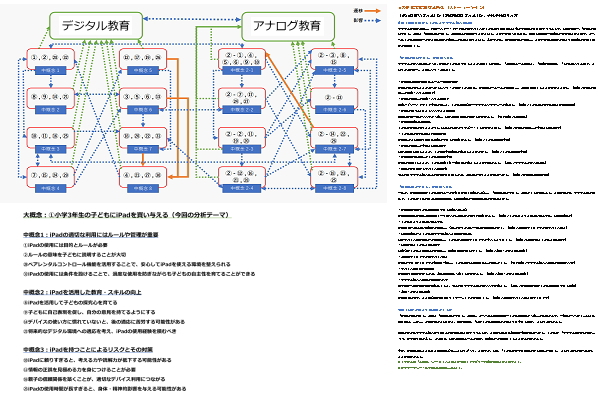
[Main Consultation Categories]
| Analysis Category | Main content | Where human expertise is difficult to replace with AI | Review and Refinement of AI Analysis / Existing Outputs |
|---|---|---|---|
| Text Mining |
• Extraction of words and phrases from free-text responses • Organization of occurrence frequencies • Examination of co-occurrence relationships • Identification of keyword trends • Initial organization of large text datasets |
What matters is not only identifying frequently occurring words but alsoreading and judging the contexts in which those words are used.including how theoretical hypotheses connect to measurement and structural models. | For word lists extracted by AI or software, we can remove irrelevant terms, consolidate terms, and strengthen contextual interpretation for research and reporting purposes. |
| GTA / M-GTA |
• Grounded Theory Approach • Modified Grounded Theory Approach (M-GTA) • Concept generation • Categorization • Organization of relationships among concepts |
These methods require decisions about which statements to conceptualize, where comparisons should be made, and how concepts should be related,which calls for theoretical sensitivity and consistency throughout the analytical process.This requires more than automated method selection. | For concept names and category proposals created with AI, we review their relationship to the data, concept definitions, and naturalness and consistency of analytical worksheets. |
| Thematic Analysis and Content Analysis |
• Thematic analysis • Theme analysis • Content analysis • Organization by category • Identification of patterns and differences |
It is important not only to extract common themes but also to considerhow exceptions and conflicting narratives should be handled.This is a key part of rigorous qualitative analysis. | We refine theme and category names generated by AI and reduce overlap and ambiguity so that the presentation aligns with the research objective. |
| Narrative Analysis and Discourse Analysis |
• Analysis of narrative structure • Examination of changes in meaning-making • Consideration of forms of expression and positioning • Organization of discourse characteristics |
These approaches require attention not only to what is said but also tohow it is said and what assumptions underlie the discourse.This interpretive perspective is essential. | We supplement narrative flow and context that AI may fail to capture and help organize the use of quotations and the order of narrative presentation. |
| KJ Method and Case Studies |
• Diagramming using KJ Method Type A • Narrative presentation using KJ Method Type B • Group formation • Comparative organization across cases • Identification of case characteristics |
The key is deciding how fragments of information should be grouped into meaningful units,which requires sound structural judgment.This requires more than automated method selection. | For cards or preliminary classifications organized by AI, we review logical relationships and the validity of groupings. |
| Partial Requests and Related Support |
• Coding only • Categorization only • Transcript organization • Coding of audio and video materials • Consultation on analysis assuming transcription will be performed • Restructuring for reports and presentation materials |
We can isolate and support only the necessary stages whilemaintaining consistency with the overall research project.This requires more than automated method selection. | Using initial codes or drafts created by AI, we can organize materials into codebooks, category lists, and draft result descriptions. |
[Other Consultation Types]
• Organization of free-text responses and classification of short comments
• Preprocessing of transcripts, normalization of spelling and notation, and assistance with anonymization
• Creation of code lists and category lists
• Selection of quotations and organization of narrative text for manuscripts
• Recommending analytical methods again based on the research objective
• Organization of credibility and validity considerations in qualitative research
• Preparation of organizational drafts for member checking or collaborative analysis
• Review of AI-generated qualitative-analysis reports
• Naturalization and professional refinement of AI-generated summaries
• Restructuring of results for reports, conference presentations, and manuscripts
* We also support analyses not listed above and partial requests.
You may request only transcript organization, coding, categorization, or review of AI-generated analytical results..
Depth of Analytical Design and Interpretation Support
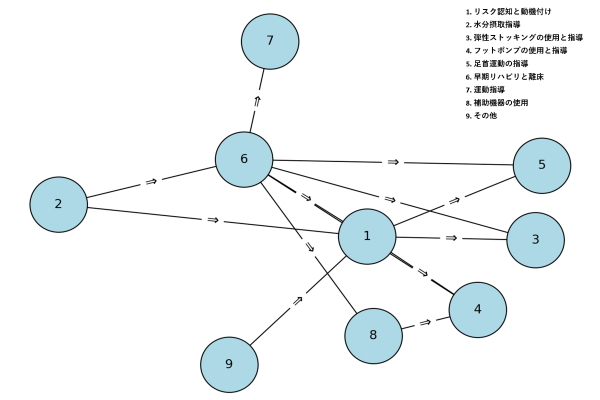
[Examples of Levels of Qualitative Analysis and Text-Mining Support]
•Basic Organization SupportTranscript organization, free-text classification, keyword extraction, and basic text organization
•Standard Analysis SupportCoding, categorization, theme organization, content analysis, and KJ-method organization
•Advanced Analysis SupportM-GTA, GTA, narrative analysis, discourse analysis, and methodology selection tailored to the research objective
•Research and Publication SupportOrganization of quotations, results narrative, preparation of figures/tables, and wording adjustment for manuscript text
•AI Analysis Refinement SupportRefinement of AI-generated code proposals, category proposals, and summaries into academically and practically appropriate forms
•Report / Presentation SupportRestructuring of findings for conference presentations, internal reports, and practice reports
What matters in qualitative analysis is not merely reading and summarizing text, but designing an analysis suited to the objective and developing evidence-based interpretations. For this reason, we emphasize support that includes coding criteria, rationale for categorization, and interpretation of the meaning of the results.
Customizing Your Request
For qualitative-analysis and text-mining support,we provide flexible customization according to the research objective, data format, availability of transcripts, sample size, preferred analytical method, and required delivery format.We can organize outputs for research, manuscript preparation, conference presentations, practice reports, internal reports, and other uses.
| Customization Item | Description |
|---|---|
| Clarifying the Research Objective and Questions | We clarify what the study seeks to reveal and what meaning structures should be understood, thereby defining the analytical focus. |
| Support for Transcripts, Free-Text Responses, and Audio Data | In addition to electronic transcripts, free-text responses, and observation records, we can discuss analysis of audio data assuming transcription will be performed. |
| Consultation on analytical methods | Depending on the research objective and questions, we can advise on appropriate methods such as M-GTA, thematic analysis, content analysis, the KJ method, and text mining. |
| Organizing Credibility and Validity | We also support organization of methodological considerations such as transparency of the analytical process, collaborative analysis, member checking, and triangulation. |
| Review of AI-Generated Analysis Results | We can polish unnatural or methodologically inconsistent AI-generated code proposals, category proposals, summaries, and draft discussion text. |
| Partial Requests | We also accept partial requests such as coding only, categorization only, transcript organization only, quotation selection only, or results writing only. |
The scope of support and whether additional fees apply vary depending on the request. If you provide the sample size, transcript character count, data format, and analytical objective, we can give more appropriate guidance.
Indicative Fees
| Item | Description | Notes |
|---|---|---|
| M-GTA | Per five interviews with up to 50,000 Japanese characters of text data \99,800 |
Representative estimated pricing including concept generation, categorization, and organization of results. |
| KJ Method | Per five interviews with up to 50,000 Japanese characters of text data \78,800 |
Estimated pricing for organization including diagramming and narrative description. |
| Coding Only | Per five interviews with up to 50,000 Japanese characters, for coding and categorization only \69,800 |
Estimated pricing when only part of the analytical process is requested. |
| Text Mining and Free-Text Organization | Quoted individually | Pricing is quoted according to word count, number of responses, and the scope of visualization and interpretation required. |
| AI Analysis Refinement | Quoted individually | Review of AI-generated code proposals, category proposals, summaries, and interpretation text is quoted according to the content. |
| When pricing may vary | Additional pricing may apply for increased transcript volume, larger samples, more advanced analysis, figure/table adjustment, or added manuscript support. | If the scope is difficult to estimate, simply tell us the approximate scale and we can provide guidance. |
| Check the Fee Schedule | → View the Fee Schedule | You can also review other analytical and related services. |
You may contact us at the stage of “I want advice on which analysis is appropriate for my transcripts” or “I want a professional review of qualitative-analysis results produced by AI.”.
If you provide the sample size, transcript character count, data format, and analytical objective, we can give more specific guidance.
Contact Us
Over 30,000 consultations / Over 19,000 completed engagementsWe have supported consultations and requests involving analysis outsourcing, statistical processing, survey research, marketing support, and related services. Our experienced consultants carefully listen to your needs andAnalysis design, transcript organization, coding, categorization, and review of AI analysisStat Agent team members across Japan take responsibility for supporting our clients.
*We provide the profile of the person responsible for your project when you place an order.
For qualitative analysis and text-mining support, contact Stat Agent.
*When order volume is high, it may be difficult to reach us by phone.
We apologize for the inconvenience. We respond in order of receipt, so if your matter is urgent, please contact us by
